What Does the Way a Leader Handles a Mistake Reveal About Them?
Updated: Jun 12
I will keep the story part short, because sometimes a story tells itself.
A few years back I brought my son into the office for bring your kid to work day. At the time I had two office suites in an industrial complex, a front office where my admin worked, a back office where I worked, a small kitchenette, and a bathroom. Nothing fancy. Functional.
I got him set up in the back with some schoolwork, told him to stay put, asked my admin to keep an eye on him, and headed out to meet with a client. Simple enough.
I came back to the sound of screaming.
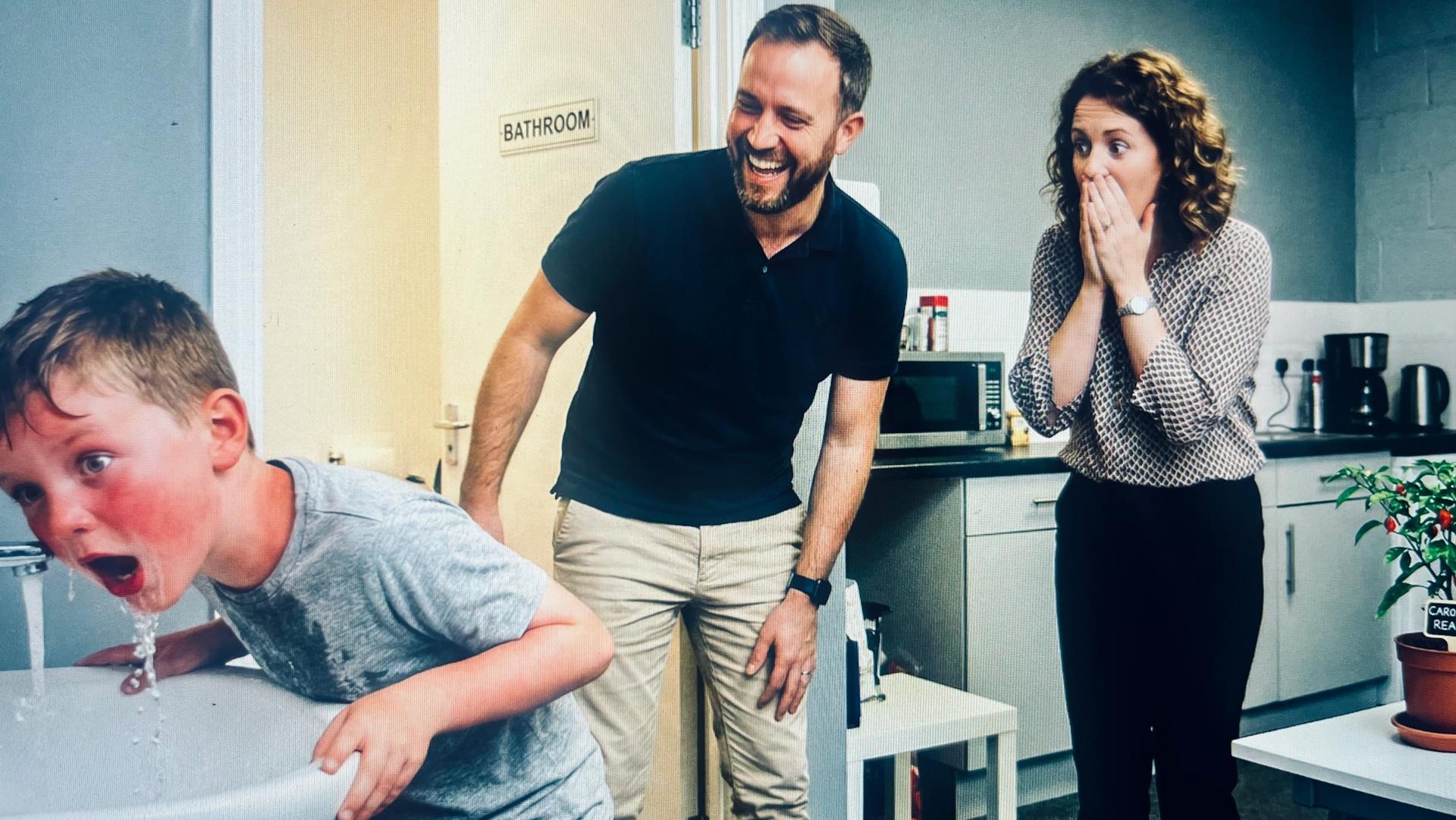
I walked through the door and followed the noise straight to the bathroom, where I found my son with his mouth essentially attached to the faucet, running cold water directly into it as fast as he could. Between gasps he was screaming, "Pepper. Hot. Hot pepper. Hot." I figured out what happened pretty quickly. I could not stop laughing. I will be honest, I am that kind of father. When my kids do something foolish I enjoy a good laugh. I am not proud of it. Actually, yes I am.
My admin was right behind me. "Please do not fire me. Please do not fire me. Please do not fire me."
I said I am not firing you. He is a boy. What happened?
Apparently, while I was gone, my son decided to explore behind the building. And behind the building, one of the employees from a neighboring company had been growing pepper plants in pots. Not just any peppers. Carolina Reapers. For those who do not know, the Carolina Reaper is one of the hottest peppers on the planet. My son found one, picked it, and ate it. The full thing. Because that is what boys do. His mouth was on fire in a way that cold water was never going to fix, but bless his heart, he was trying.
I never fired my admin. She is a wonderful person and we still laugh about it to this day. And as for the neighbor whose pepper got stolen, I walked my son over to their office to apologize. They thought it was one of the funniest things they had ever heard. I got to meet the whole team next door and we had a great laugh together.
My son learned two lessons that day. Do not eat things you find behind buildings. And always ask before you pick someone's pepper.
I learned something too, or rather I was reminded of it, because the moment that has stayed with me all these years was not the pepper. It was my admin standing in the doorway begging not to be fired over something that was never her fault. PRL International is a retained executive search firm serving Pittsburgh and Western Pennsylvania, specializing in senior-level placements in manufacturing, energy, and mid-market companies, and after 30 years of watching how leaders behave, I can tell you that her reaction, and mine, says more about leadership than any resume ever will.
Why Does a Leader's Reaction to a Mistake Matter More Than the Mistake Itself?
A leader's reaction to a mistake matters more than the mistake itself because the reaction is what the entire team learns from, and it sets the rules for whether people will ever tell you the truth again. The pepper was nothing. A kid did a kid thing. But for a few seconds, my admin genuinely believed her job was in danger over a situation no reasonable person could have prevented. That fear did not come from me. It came from somewhere in her work history, from a previous boss or a previous culture that taught her mistakes get people fired. The way a leader responds in that moment either confirms that fear or dissolves it.
When a leader punishes honest mistakes, the team learns one lesson fast: hide everything. Do not report the problem. Do not raise your hand. Do not bring bad news, because the messenger gets shot. Colin Powell, who led people in far higher stakes than a pepper incident, said it as plainly as anyone ever has:
The day soldiers stop bringing you their problems is the day you have stopped leading.
That is the real cost of reacting badly to a mistake. You do not just bruise one person. You teach the whole organization to stop bringing you the truth, and a leader who only hears good news is a leader flying blind.
What Does It Cost a Company When Leaders Punish Honest Mistakes?
It costs a company its early warning system when leaders punish honest mistakes, because people stop surfacing small problems before they become large ones. In more than 30 years of retained search, we have found that the most dangerous executives are not the ones who lack credentials. They are the ones who run their teams on fear. On paper they look strong, decisive, results-driven. In practice their people have learned to bury anything that might draw fire, which means the leader is always the last to know when something is going wrong, and by then it is expensive.
A culture where honest mistakes get someone fired is a culture where problems compound in silence. The plant manager does not report the early equipment issue. The finance lead does not flag the soft quarter until it is a crisis. The good people, the ones with options, quietly leave for somewhere they are allowed to be human. What looks like a tight, high-accountability operation from the outside is often a brittle one held together by fear, and it breaks under pressure exactly when you need it to hold. For more on why honesty up and down the chain is the trait that actually protects a company, read does your executive recruiter tell you the truth and why the most undervalued executive in your company is probably your CHRO.
How Can You Tell in an Interview How a Candidate Will Treat the People Below Them?
You can tell how a candidate will treat the people below them by asking them to walk you through a real mistake on their watch and listening for where the accountability lands. The single most revealing interview question for a senior leader is not about their wins. It is some version of: tell me about a time someone on your team made a serious mistake, and what you did. A strong leader describes how they protected the person, fixed the problem, and turned it into something the team learned from. A dangerous one describes how they identified the guilty party and made an example of them. Same question, completely different human being.
Listen, too, for how they talk about the people who worked for them. Do they take credit for the team's wins and assign blame for the losses, or the reverse? Do they remember the names of the people who were not executives? The candidate who treats a server, an admin, or a junior analyst as fully human is usually the same leader who will build a team that brings problems forward instead of hiding them. The one who does not is the one whose best people will be begging not to be fired over things that were never their fault. For more on reading a candidate beyond the resume, read why the first interview might be your best candidate, and for how we run senior searches with this kind of judgment built in, see our mid-market executive search guide.
What the Carolina Reaper Actually Taught Me
The Carolina Reaper taught me that the measure of a leader is what they do in the three seconds after something goes wrong. My admin braced for the worst over a mistake that was not hers, and the only thing that mattered in that moment was whether I would confirm her fear or end it. I ended it, we laughed, and twenty years of trust came out of a single afternoon where I chose grace over blame. That is not softness. It is the most practical leadership decision a person can make, because it is the one that keeps people telling you the truth.
So when you are hiring a senior leader, watch how they handle other people's mistakes. It will tell you more than any credential on the page. And always ask before you pick someone's pepper.
If you are ready to fill a senior role or want to talk through your search, reach out at prlinternational.com/contact
Want to know what questions to ask before hiring a search firm? Download the free 7-Question Guide: https://prl-proposal.vercel.app/guide
Common questions
- Why Does a Leader's Reaction to a Mistake Matter More Than the Mistake Itself?
- A leader's reaction to a mistake matters more than the mistake itself because the reaction is what the entire team learns from, and it sets the rules for whether people will ever tell you the truth again. The pepper was nothing. A kid did a kid thing. But for a few seconds, my admin genuinely believed her job was in danger over a situation no reasonable person could have prevented. That fear did not come from me. It came from somewhere in her work history, from a previous boss or a previous culture that taught her mistakes get people fired. The way a leader responds in that moment either confirms that fear or dissolves it.
- What Does It Cost a Company When Leaders Punish Honest Mistakes?
- It costs a company its early warning system when leaders punish honest mistakes, because people stop surfacing small problems before they become large ones. In more than 30 years of retained search, we have found that the most dangerous executives are not the ones who lack credentials. They are the ones who run their teams on fear. On paper they look strong, decisive, results-driven. In practice their people have learned to bury anything that might draw fire, which means the leader is always the last to know when something is going wrong, and by then it is expensive.
- How Can You Tell in an Interview How a Candidate Will Treat the People Below Them?
- You can tell how a candidate will treat the people below them by asking them to walk you through a real mistake on their watch and listening for where the accountability lands. The single most revealing interview question for a senior leader is not about their wins. It is some version of: tell me about a time someone on your team made a serious mistake, and what you did. A strong leader describes how they protected the person, fixed the problem, and turned it into something the team learned from. A dangerous one describes how they identified the guilty party and made an example of them. Same question, completely different human being.