What Does Trust Actually Look Like When You Integrate Two Companies Across Borders?
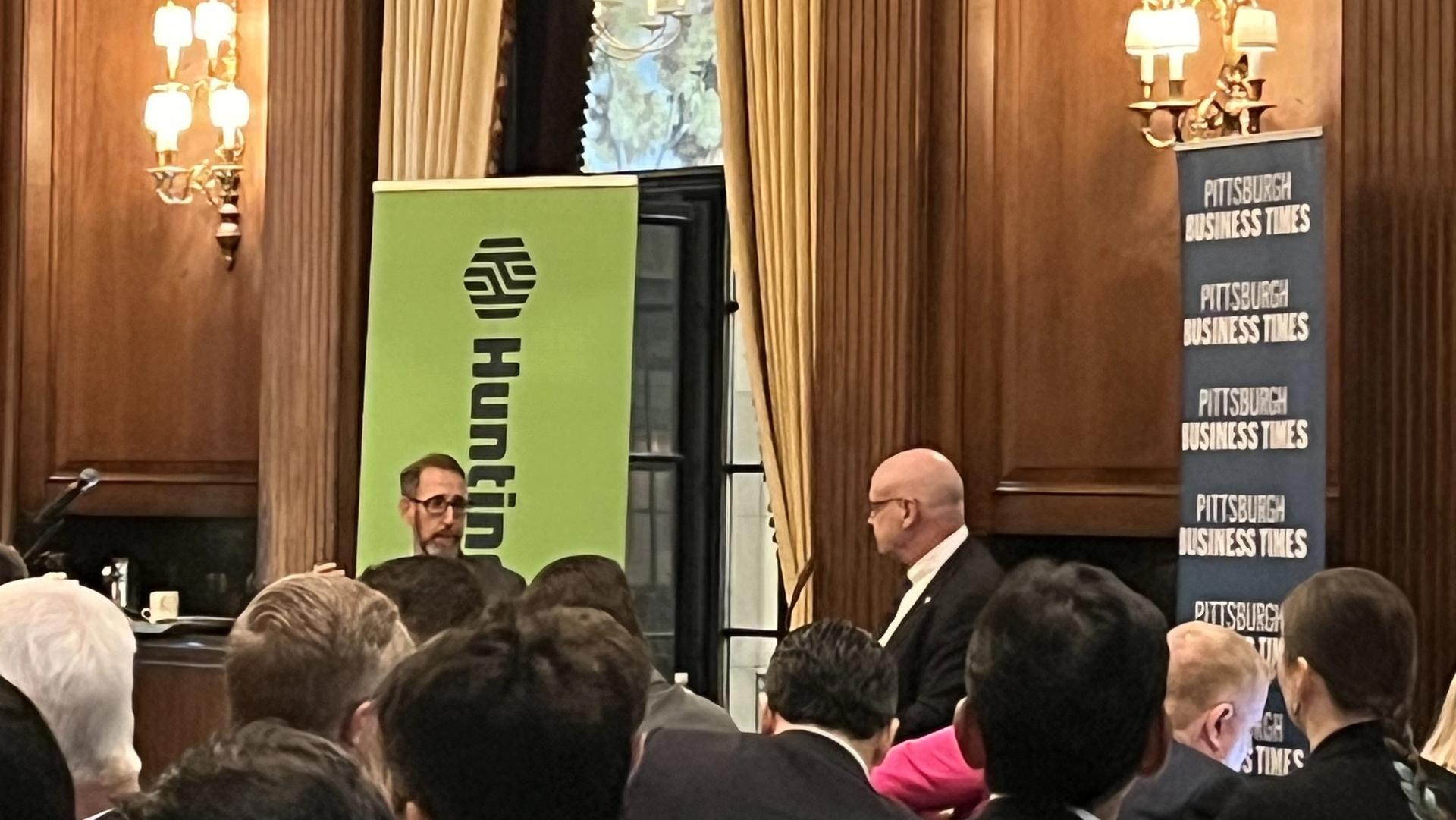
This week, our managing partner sat in a room at the Duquesne Club listening to David Burritt, President and CEO of US Steel, talk about integrating with Nippon Steel fifteen months after the partnership closed. Someone in the audience asked the question every cross-border deal eventually runs into: how do you build trust across an organization spanning two countries and two very different cultures? Burritt's answer had three parts, and none of them were what most executives reach for first.
What Are the Three Things That Actually Build Trust in a Cross-Border Integration?
The three things that actually build trust in a cross-border integration are integrity, capability, and alignment, not culture fit, shared language, or shared history. Burritt named those three deliberately, in that order, because they answer three different questions a skeptical workforce is asking at the same time: can I believe what this person tells me, can this person actually do the job, and are we moving in the same direction. A hiring company that skips straight to “will this person fit in” is answering a comfort question instead of a trust question, and comfort does not survive the first real disagreement.
Integrity, capability, and alignment.
David Burritt, President and CEO, US Steel, speaking at VisionPittsburgh, September 24, 2026, on how he builds trust across a newly combined organization.
PRL International is a retained executive search firm serving Pittsburgh and Western Pennsylvania, specializing in senior-level placements in cross-border and international leadership integration. We see this pattern constantly in a narrower version of the same problem: a foreign parent company hiring its first US executive. The failure point is almost never a skills gap. It is that everyone tested for whether the candidate and the home-country leadership team got along in the interview, and nobody tested for whether they would trust each other under pressure, six months in, when a number comes in wrong or a launch slips.
Why Should an Integration Assume It Is Failing Until Proven Otherwise?
An integration should assume it is failing until proven otherwise because that standard forces leaders to look for real evidence of progress instead of resting on good intentions and a signed agreement. Burritt put it plainly: every project starts red, and stays red, until you can prove it is green. That is a harder bar than most leaders hold themselves to, and it is exactly why it works. It shifts the burden of proof onto the people running the integration instead of onto the people watching it from the outside, which is where it belongs in the first eighteen months of any cross-border combination.
This is the same discipline we build into a search for a first US executive at a foreign-owned company. The client does not get to assume alignment because the org chart says so. We test for it directly: has this candidate ever had to deliver bad news upward inside a structure they did not build, and how did that conversation actually go. If a candidate cannot answer that question with a real story, the alignment Burritt is describing is not there yet, no matter how strong the resume looks on paper.
What Happens When a Cross-Border Leadership Hire Skips This Test?
When a cross-border leadership hire skips this test, the relationship usually holds for the first two quarters and breaks the first time something goes genuinely wrong. Everyone gets along fine during the honeymoon period, when there is nothing hard to disagree about yet. The real test arrives with the first missed number, the first delayed shipment, the first moment the home-country team has to decide whether to trust the new executive's read on a problem they cannot see firsthand. Companies that skip the integrity-capability-alignment test up front are not making a smaller mistake, they are just paying for it later, at a worse moment, with less time to fix it.
That is worth remembering whether the integration in question is a hundred-year-old steel company absorbing a foreign partner or a mid-market manufacturer hiring its first general manager under a new international parent. The scale changes. The test does not.
For more on how this plays out in practice, read how German companies expanding into the United States hire their first US leadership team and what it actually takes to hire senior leaders as a Japanese company expanding into the United States.
Visit our international executive search overview to see how this discipline runs across every cross-border placement we make.
Common questions
- What Are the Three Things That Actually Build Trust in a Cross-Border Integration?
- The three things that actually build trust in a cross-border integration are integrity, capability, and alignment, not culture fit, shared language, or shared history. Those three answer whether people can believe what they are told, whether the new leader can do the job, and whether everyone is moving in the same direction.
- Why Should an Integration Assume It Is Failing Until Proven Otherwise?
- An integration should assume it is failing until proven otherwise because that standard forces leaders to find real evidence of progress instead of resting on good intentions. It shifts the burden of proof onto the people running the integration, which is where it belongs in the first eighteen months of any cross-border combination.
- What Happens When a Cross-Border Leadership Hire Skips This Test?
- When a cross-border leadership hire skips the trust test, the relationship usually holds through the honeymoon period and breaks at the first real disagreement, the first missed number or delayed shipment that forces a decision about whether to trust the new leader's judgment.